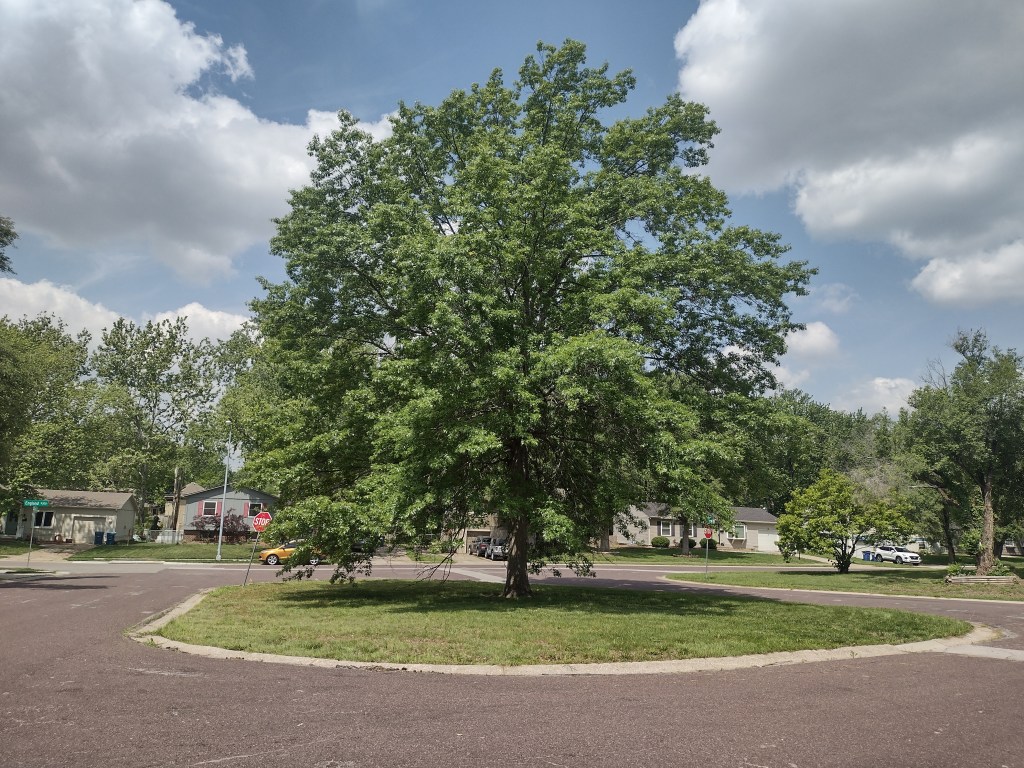
Life for Dorothy Moody Elementary School students wasn’t all about the school. We had a community and a network, that stretched out to the surrounding neighborhoods. Personal ties could come from school, but also just as easily from living on the same block, or alternatively in knowing that your suburban parents worked in the same place. Other links could form through participation in extracurricular activities.
I visited a landmark, which still exists, although its location is “off campus” from the school that was first built in surroundings of pastures and farm fields before the houses dotted in through development. It was known to my network of fellow students. I’m not too sure many of the parents fully understood its draw.
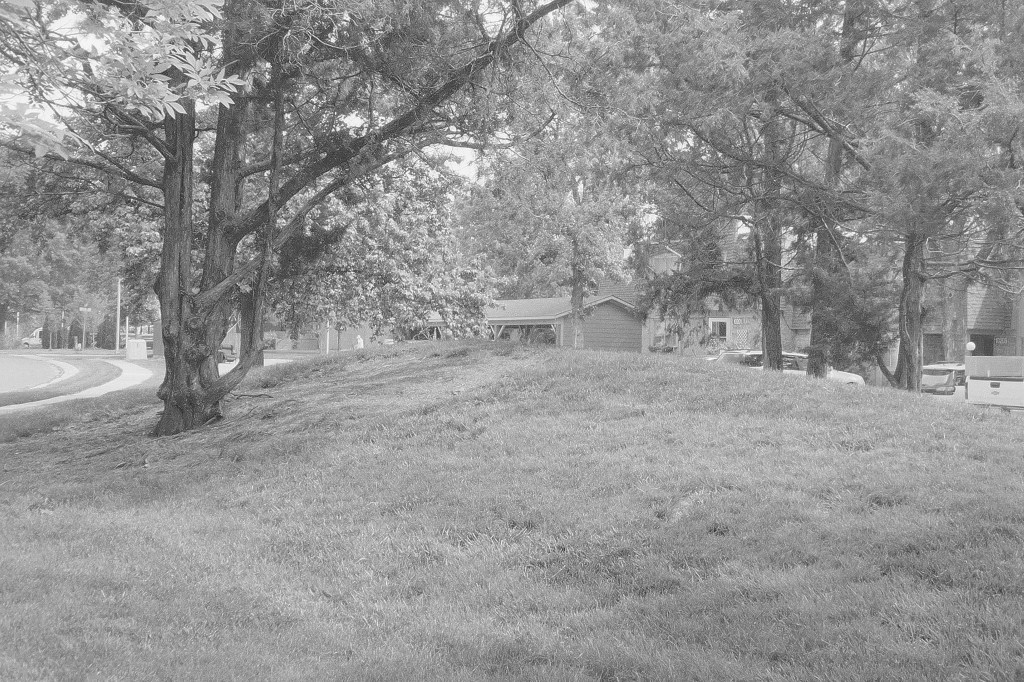
Part of a local apartment complex landscape, The Hill was always known in my circle of classmates and among students of all grades. I never figured out how much the principle and teachers knew of its call to our attentions, but there were occasional admonishments if they were concerned.
The Hill was the focal point of a key activity that included all comers. Its rounded crest and grassy slopes on all sides lent to a marvelous venue for games of King of the Hill.
Depending on the day, kids from all grades might show up to watch and to participate. Larger, therefore typically older grade-schoolers might understandably dominate the endeavor. This didn’t stop the smaller and younger ones. The goal was to be the one left standing on the top, after pushing or shoving or tackling or otherwise redirecting upward attempts of occupation. There were team efforts, at times; alliances could sway the results considerably. There were full frontal assaults and even just some downright sneaky methods to try and attain the summit.
This was surprisingly not so unsafe, as the modern parental and educational perceptions might infer, here, decades later. Even in my most honest memories, I don’t remember major injuries to anything but egos (I remember some students could show up and try repeatedly, as a method of letting off frustrated steam from a bad day at school). Scraped elbows or knees, and grand celebratory streaks of grass stains on clothing were the typical casualties.
King of the Hill might start after school and last until the parents drove past, or poked their heads out of nearby apartments, calling us back to eat, or do homework, etc. Termination of the event was most often with group laughter, as personal efforts of victory and not so much victory were recounted before parting.
I said The Hill was a key focal point for a key activity. Okay, there were two main activities, and the second wasn’t as much about pleasant camaraderie. This was the challenge to a fight. It was the stuff of arguments and misunderstandings.
Whereas King of the Hill had young and old, boys and girls watching and participating, fighting at The Hill was usually – not always – about the boys. “So-and-so will be at The Hill after school, and So-and-so had better be there.” (so-and-so-to-speak). This was a challenge delivered personally or through friends from the challenger to the challenged. It was always said to be overheard, and by the time those doors opened at Dorothy Moody, much of the school population knew about it.
Fights weren’t for everyone to come. They were typically for the two to fight, and their close circle of friends. There was more tension. More anger. Onlookers might be asked to watch only from a distance, or even chased off.
There were never weapons. There were no gang rumbles as in West Side Story. Most fights included fists, shoving, kicking and tripping, again on The Hill. True, a few black eyes might have been doled out, evident the next school day. Arguments didn’t continue beyond The Hill.
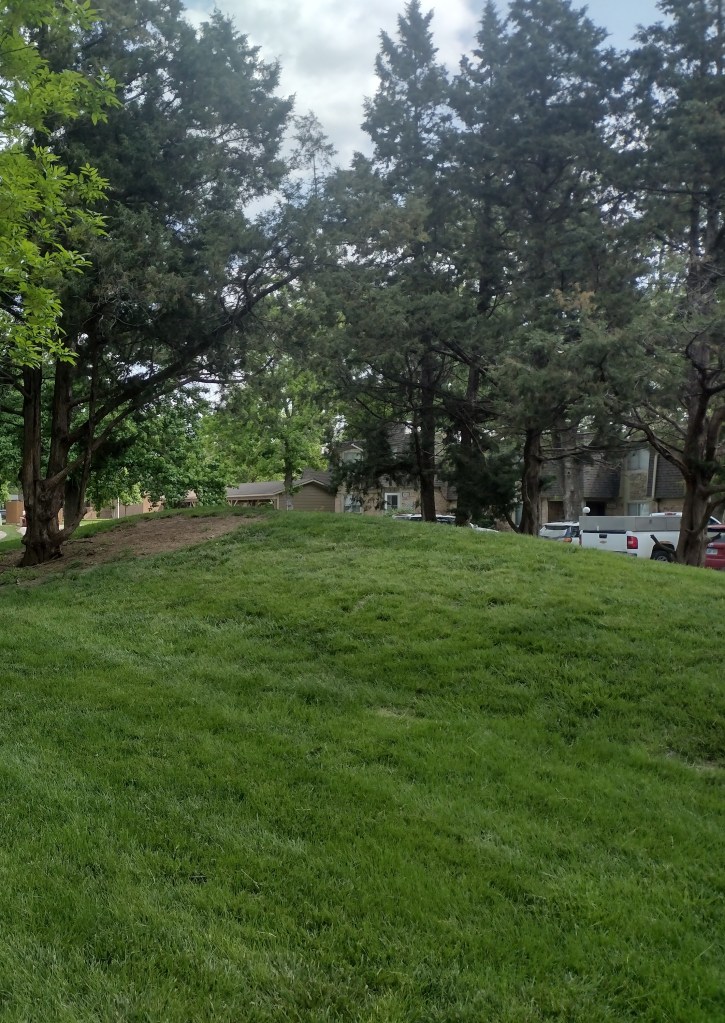
Okay, I said The Hill had a key focus. And yes, I admit that it really had two key activities associated with it. Well … alright, then there is a third aspect that has been there in my mind through the years.
The Hill was a place where we developed and carried a sort of grade school sense of honor, that I can’t fully explain.
King of the Hill had honor, as our little community conducted it. Little kids could participate, with a sort of (sometimes melodramatic) protection from more injurious outcomes. Anger only rarely ever came into a ‘battle’ for the top of The Hill, and then only more rarely remained the duration of the doings. Smiles came from the shared challenges of the day.
I thought of this in more recent years, even as I enjoyed sparring in martial arts. You learn that you can give and you can take, and it doesn’t hurt. You learn of a resilience of character. You can compete with respect and honor.
How did honor fit with fight challenges on The Hill? I can’t grasp the Why? of it, yet honor was there, as our community adapted anger and ego to that small piece of real estate. How?
If there were dangerous fights the authorities would have something to say about, they weren’t brought to The Hill. An insulating effect, then, was in place, against more serious activities. A challenge was public. Yes, the fight might actually take place, but again, on the curved slopes of The Hill, even angry fighters tended to fall away from each other, rather than clench and clutch to keep at odds in the match. This insulated against more serious injuries; a torn shirt from a fight might be worn as a trophy the next school day.
Yet, there was something else. If the challenge was made, there was honor in the challenged just showing up. A challenger might be satisfied that a challengee even showed up, and either call off the fight altogether, or make it a short event, with maybe one good throw or tackle down the grassy slope.
I was called out for one of these challenges. It was my one and only time, and I recall that there wasn’t really a reason, other than that I had shown the challenger up during some playground game in recess. I was younger and smaller, with no reputation for fighting. Part of the school chatter was that I wouldn’t even go there after school. I showed up. I met the challenge and showed the honor of standing there as if to answer for whatever the complaint was. We did not fight. All was good in the eyes of the challenger and nobody in school ever said anything bad about either of us for it.
This type of honor might not define the word in the way you use it. Yet, it surrounded us in a community dynamic that still offered support through rambunctious play. A variety of respect was included, allowing even young students to participate, safely and enjoyably, in King of the Hill. Even the challengers to a fight could demonstrate honor in recognition of courage instead of holding to imagined expectations of aggression.
If your walk brings you to a version of The Hill, keep the respect and honor in your stride. You are built with resilience. You are also built with forgiveness. Find the good there.
 Tamed Along Life Trails